On-brand AI imagery: build a visual system so AI content doesn't look generic
Everyone has the same image generators. What makes your AI visuals recognisable is the system behind them — palette, lighting, props and rules

AI image tools have made it easy to produce a beautiful picture. They have also made it easy for every brand to look the same: the same glossy lighting, the same perfect faces, the same vaguely futuristic backgrounds.
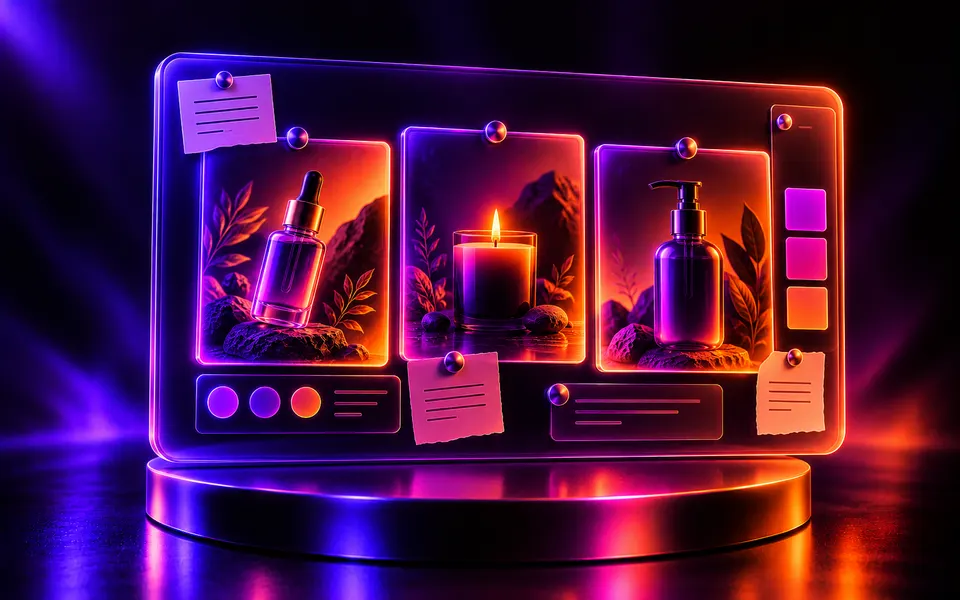
The brands that stand out treat AI as a production tool inside a visual system, not as a slot machine. Here is how to build one.
Define the system before you prompt
- Palette. Three to five brand colours, plus the background tones you allow.
- Lighting. Soft daylight, warm studio, high-contrast — pick one primary look.
- Composition. Where the product sits, how much negative space, typical camera angles.
- Props and settings. The real-life moments that belong to your brand — a homemade breakfast, a gym bag, a clinic counter.
- What you never show. Clichés, competitor colours, unrealistic results.
Write this down in one page with reference images. It becomes the brief for every generation.
Turn it into prompt templates
Instead of writing new prompts each time, create templates with fixed style language and a slot for the subject: "[product] on a warm beige linen surface, soft morning window light from the left, shallow depth of field, brand blue accent in the background, no text". Consistent wording produces consistent images.
Start from the real product
Customers will compare your images with what arrives at their door. Use real product photos as references, keep packaging, labels and colours accurate, and never let the AI "improve" the product itself. AI is best for settings, moods and variations around a true product.
Review like an art director
Before anything is published, check hands, text, logos, packaging details and proportions. Reject images that are almost right. One odd detail can make the whole brand feel cheap.
Produce in sets
Generate imagery as campaign sets — a hero image, two or three supporting images and matching vertical crops for Reels and Shorts. Sets look intentional, and they fit straight into the website, ads and social without extra work.
Keep a library
Store approved images with tags (product, season, campaign) so your team can reuse them instead of regenerating. Over time, that library becomes one of your most valuable brand assets.
A clear visual system is what turns AI from a novelty into a dependable studio — fast, affordable and unmistakably yours.
Want content like this for your brand?
AI imagery, UGC-style video and the website to carry it.